
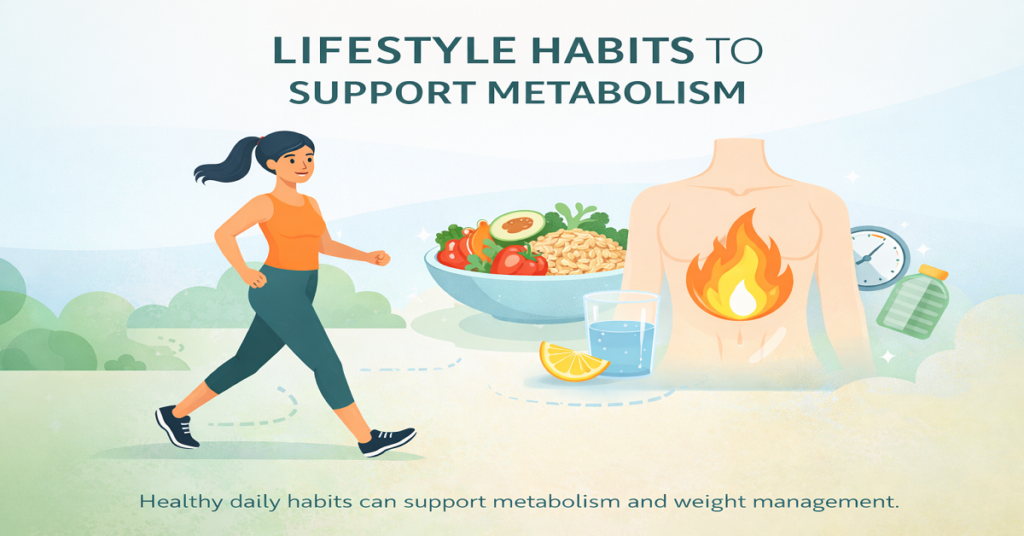
Many people struggle with weight gain even when they don’t feel they are eating too much. One common reason behind this can be a slow metabolism. Metabolism plays an important role in how your body converts food into energy, and when it slows down, it can affect weight management, energy levels, and overall wellness.
In today’s busy lifestyle, certain habits can gradually slow down metabolism. The good news is that small daily changes may help support a healthy metabolism naturally.
In this article, we’ll explore what slow metabolism is, common signs, and simple lifestyle habits that may help support metabolic health.
What Is Metabolism and Why Does It Matter?
Metabolism is the process by which your body uses calories from food to produce energy. A healthy metabolism helps your body maintain energy levels, manage weight, and support normal body functions.
Factors like age, diet, stress, sleep, and activity level can influence how fast or slow your metabolism works.
Making small changes in your daily routine and understanding slow metabolism lifestyle habits may help support better energy balance and overall wellness.
Common Signs of Slow Metabolism
A slow metabolism may show up in different ways. Some common signs include:
1. Unexplained Weight Gain
If you are gaining weight even without major changes in diet, it may be linked to metabolic changes.
2. Low Energy and Fatigue
Feeling tired throughout the day, even after proper sleep, can be related to how efficiently your body produces energy.
3. Difficulty Losing Weight
Some people find it hard to lose weight despite trying different diets and exercise routines.
4. Cold Sensitivity
Feeling cold more often than usual can sometimes be associated with metabolic changes.
5. Digestive Issues
Slow digestion, bloating, or constipation can also be related to lifestyle factors that affect metabolism.
These are general lifestyle-related signs and not a medical diagnosis. For persistent concerns, it’s best to consult a qualified healthcare professional.
Lifestyle Habits That May Help Support Metabolism
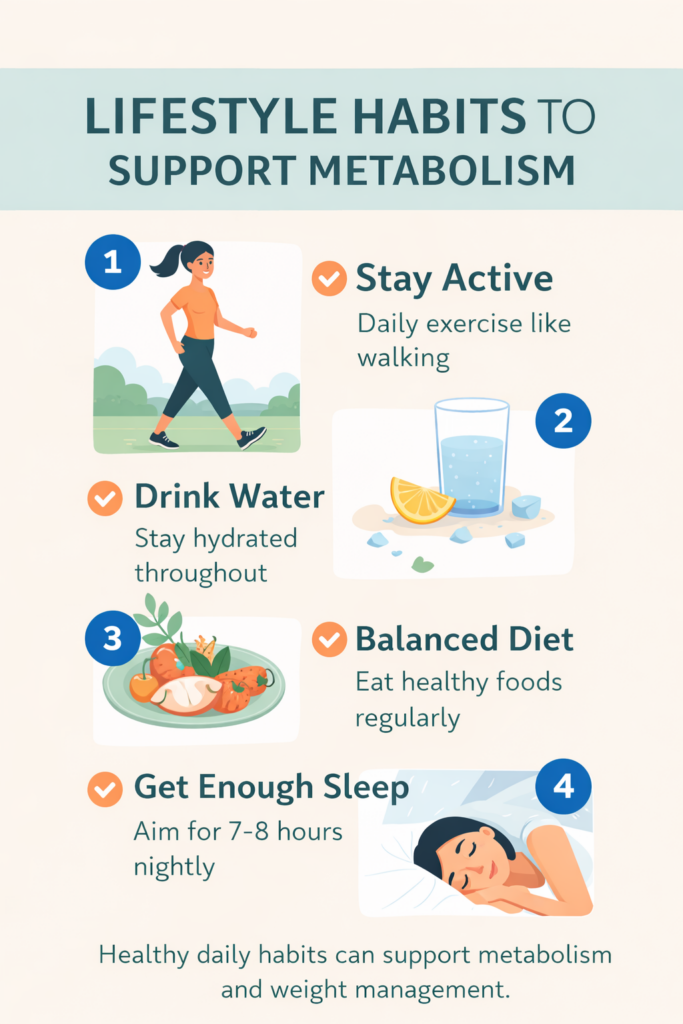
You don’t need extreme diets or intense workouts to support metabolism. Simple, consistent habits can make a big difference over time.
1. Eat Balanced Meals
What you eat plays a big role in metabolic health.
Include in your diet:
- Lean proteins (eggs, beans, fish, tofu)
- Whole grains (oats, brown rice, quinoa)
- Fresh fruits and vegetables
- Healthy fats (nuts, seeds, olive oil)
Try to avoid skipping meals, as it can slow down metabolic processes.
2. Stay Physically Active
Movement helps your body use energy more efficiently.
You don’t need a gym membership. Simple activities like walking, stretching, yoga, or light home workouts can help keep your body active.
Tip: Aim for at least 20–30 minutes of movement daily.
3. Get Quality Sleep
Sleep plays a key role in metabolism and hormone balance. Poor sleep can affect appetite and energy levels.
Simple sleep tips:
- Maintain a consistent sleep schedule
- Avoid screens before bedtime
- Keep your bedroom dark and quiet
4. Manage Daily Stress
Chronic stress can influence hormones that affect appetite and energy use.
Stress management ideas:
- Deep breathing exercises
- Meditation
- Spending time in nature
- Listening to music or hobbies
5. Stay Hydrated
Drinking enough water supports many body processes, including digestion and energy production.
You can include:
- Plain water
- Herbal teas
- Lemon water
6. Avoid Crash Diets
Extreme calorie restriction can slow down metabolism and make weight management harder in the long run. Focus on sustainable, balanced eating habits instead.
7. Build Healthy Daily Routines
Small habits repeated daily can support overall wellness:
- Eat meals at regular times
- Avoid late-night heavy meals
- Practice mindful eating
- Reduce sugary snacks and drinks
Can Supplements Support Metabolism?
Many people use natural dietary supplements along with healthy lifestyle habits to support metabolism and weight management. These supplements are usually formulated with plant-based ingredients designed to complement diet and daily routines.
However, supplements are not a substitute for a balanced diet and active lifestyle. They are best used as part of a holistic wellness routine.
Final Thoughts
A slow metabolism can make weight management and energy levels challenging, but it doesn’t mean you are stuck. By improving daily habits—such as eating balanced meals, staying active, managing stress, and getting enough sleep—you may support your body’s natural metabolic processes.
If you want an in-depth look at a natural supplement designed to support metabolism, you can read this Nagano Tonic review.
This content is for informational purposes only and is not intended as medical advice.