

Coffee is one of the most consumed beverages in the world. Many people start their morning with a cup of coffee hoping it will wake them up, improve focus, and even help with weight management.
But one common question keeps coming up:
Does coffee really boost metabolism, or is it just another health myth?
Let’s look at what science actually says.
Understanding Metabolism First
Before we talk about coffee, it’s important to understand what metabolism really means.
Metabolism refers to all the chemical processes in your body that convert food into energy. Even when you’re resting, your body needs energy to breathe, circulate blood, repair cells, and regulate hormones. This is known as your basal metabolic rate (BMR).
Several factors affect metabolism, including:
- Age
- Muscle mass
- Hormonal balance
- Sleep quality
- Physical activity level
- Stress
Many people first notice metabolism issues in their daily routine without understanding the deeper cause.
How Coffee Affects the Body
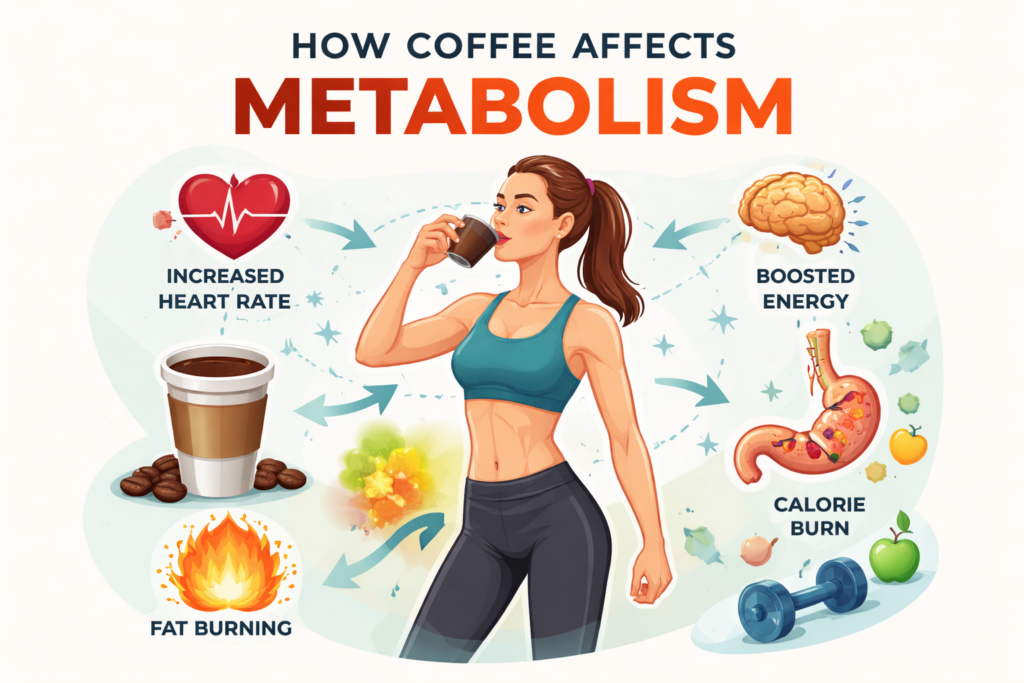
The main active ingredient in coffee is caffeine. Caffeine is a natural stimulant that affects the central nervous system.
When you drink coffee:
- Your heart rate may slightly increase
- Your body releases adrenaline
- Fat cells may release fatty acids into the bloodstream
- You may feel more alert and energetic
Because of these effects, caffeine can temporarily increase calorie burning. Some studies suggest that caffeine may increase metabolic rate by 3–11% for a short period of time.
But here’s the important part — the effect is usually temporary.
The Short-Term Boost vs Long-Term Reality
Yes, caffeine can slightly increase calorie burning. However:
- The effect decreases if you consume coffee regularly.
- Your body builds tolerance over time.
- The metabolic increase may only last a few hours.
This means drinking more and more coffee will not continuously raise your metabolism. In fact, too much caffeine can lead to:
- Sleep disturbances
- Increased stress levels
- Digestive discomfort
- Hormonal imbalance
And poor sleep alone can slow metabolism significantly.
So while coffee can offer a short-term boost, it’s not a long-term solution.
Coffee and Fat Burning: Is It the Same Thing?
Many people assume metabolism and fat burning are the same. They’re related, but not identical.
Caffeine can increase fat oxidation (the process of breaking down fat). However, fat burning only leads to fat loss if you’re in a calorie deficit.
Drinking coffee without adjusting diet, sleep, or activity levels will not automatically lead to weight loss.
In other words:
Coffee may support the process slightly, but it does not replace healthy habits.
Common Myths About Coffee and Metabolism
Myth 1: More Coffee = Faster Weight Loss
Not true. Increasing caffeine intake doesn’t linearly increase fat burning. Too much caffeine can raise cortisol (stress hormone), which may actually make fat storage worse over time.
Myth 2: Black Coffee Melts Belly Fat
There is no specific evidence that coffee targets belly fat. Fat loss happens systemically throughout the body.
Myth 3: Coffee Alone Fixes Slow Metabolism
Metabolism is influenced by multiple systems — hormones, liver function, sleep, muscle mass, and nutrient intake. No single drink can correct all of these.
What Actually Supports a Healthy Metabolism?
If coffee isn’t the full answer, what really works?
1. Muscle Maintenance
Muscle tissue burns more calories than fat tissue. Strength training helps maintain metabolic activity, especially as we age.
2. Quality Sleep
Sleep regulates hunger hormones and insulin sensitivity. Poor sleep is strongly linked to metabolic slowdown.
3. Protein Intake
Protein has a higher thermic effect compared to carbs and fats, meaning your body burns more calories digesting it.
4. Stress Management
Chronic stress increases cortisol, which can slow fat loss and affect energy balance.
5. Hormonal and Metabolic Support
Sometimes metabolism issues are linked to deeper internal factors. Addressing the root cause is more effective than relying on stimulants.
The Role of Coffee in a Balanced Approach
Coffee itself is not “bad.” In moderate amounts, it can:
- Improve focus
- Increase workout performance
- Slightly enhance calorie burning
But it works best as part of a broader lifestyle approach, not as a standalone strategy.
If someone is relying solely on coffee to fix weight struggles, they may feel disappointed over time.
Why Some People Feel Coffee Isn’t Working Anymore
Have you ever noticed that coffee used to give you a strong energy boost, but now it barely makes a difference?
That’s tolerance.
The body adapts to regular caffeine intake. Over time:
- Energy spikes become smaller
- Metabolic boost decreases
- Cravings may increase
This is why focusing only on caffeine is not sustainable.
Looking Beyond Stimulants
True metabolic health involves:
- Efficient nutrient utilization
- Stable blood sugar
- Balanced hormones
- Healthy digestion
- Active mitochondria (cellular energy production)
These systems work together. When one area is off balance, metabolism may slow down — even if you drink coffee daily.
Instead of asking, “How much coffee should I drink?” a better question might be:
“What does my body need to function efficiently?”
Final Thoughts: Does Coffee Really Boost Metabolism?
The honest answer is:
Yes — but only slightly and temporarily.
Coffee can provide a mild metabolic boost due to caffeine. However, it is not a magic solution for long-term weight management.
Sustainable results come from:
- Consistent lifestyle habits
- Proper nutrition
- Physical activity
- Supporting the body’s natural metabolic processes
If you’re curious about structured metabolic support options, you can explore a detailed breakdown in this Java Burn review.
This article is for informational purposes only and is not intended as medical advice.